
Crickets sound start on Flinders initiative
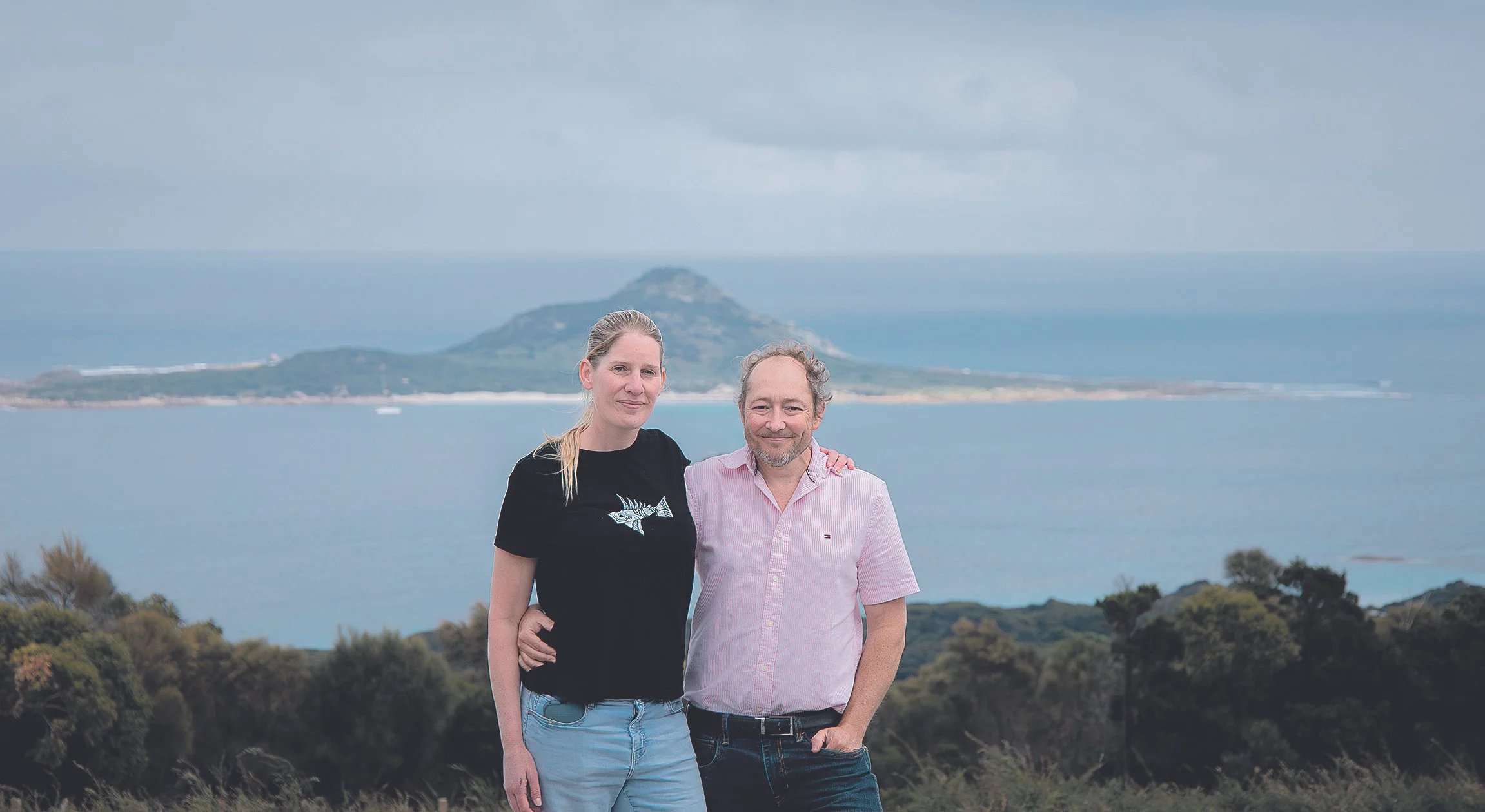
• Flinders Island Harvest owners Lauren and Kane Maxwell.
A novel farming solution on Flinders Island has won funding under Circular North’s latest round of Resource Recovery and Circular Economy Grants.
Lauren and Kane Maxwell of Flinders Island Harvest will share in $60,000 given to nine innovative projects across the State, that will collectively see 350 tonnes of waste diverted from landfill every year.
Ms Maxwell said it was an exciting contribution to the permaculture enterprise they are developing at West End.
The couple moved from Brisbane three years ago and are relishing their novel approach to sustainable farming practices.
After completing a diploma of sustainable living at UTAS, Ms Maxwell wants to apply what she learned, by teaching people about closed loop systems through their agritourism venture.
“We originally weren’t intending to have anything other than a private block and residence but the permaculture garden we are developing is too big for us, so we want to share it with the community,” Ms Maxwell said.
“It’s providing a meeting place for the community and another source of more local supplies on island because most of our produce is flown in or comes on the boat and if there are interruptions to freight it can make it difficult.
“We have guinea fowl and ducks that require a high protein diet and here on the island chook feed is $38 a bag, and high protein game feed is around $45 a bag and is often not available so we looked at novel methods of using waste and improving biodiversity.”
Enter a new cricket farm as a solution to their problem.
Food waste will be fed to crickets, and cardboard will be used for their rearing habitat. Once the insects reach maturity, they are processed into feed and the carboard is put into compost. The crickets also produce Frass which is a natural fertiliser
“We don’t want to affect the island’s biodiversity so we are going to have them in a climate-controlled shipping container with racks and containers in a fully closed system,” she said
“There will be potential to scale it up if there is enough demand on the island.”
The couple are working with entomologists to decide which species of cricket is used in the process.
While crickets are farmed in large scale operations on the mainland for feed and human consumption, she said she’s not sure the Flinders community is ready to eat them as a source of protein just yet!
The cricket project adds to a range of unique offerings Flinders Island Harvest is planning to produce including bush tucker, shitake mushrooms, edible flowers, oyster leaf plants, and cider gum for cider production using its sap.
They sell the produce they currently grow at the local food network each Saturday in Whitemark.
Circular North Chair John Marik said the 2026 grant recipients take waste diversion concepts to the next level.
“The creative thinking behind some of projects in this year’s round is really impressive... the ideas go beyond traditional methods of recycling and reuse and incorporate really original ways to promote sustainability.”
The Furneaux Collective’s accessible, drop-in Flinders Island Pop Up Repair Fairs, the installation of a Share and Reuse Shed at the front of the Dorset Community House, and a Flinders Council Biochar Project delivering a mobile biochar unit were among the other projects to receive funding.