
Anzac Day - Women in Service

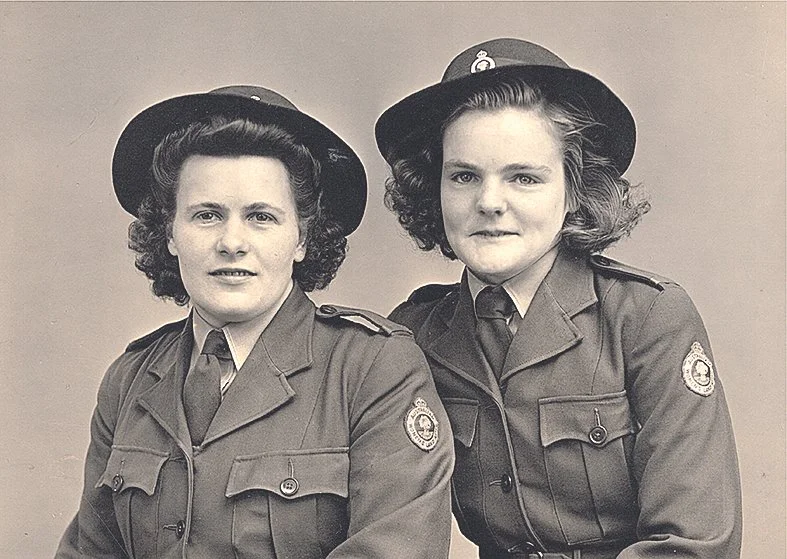
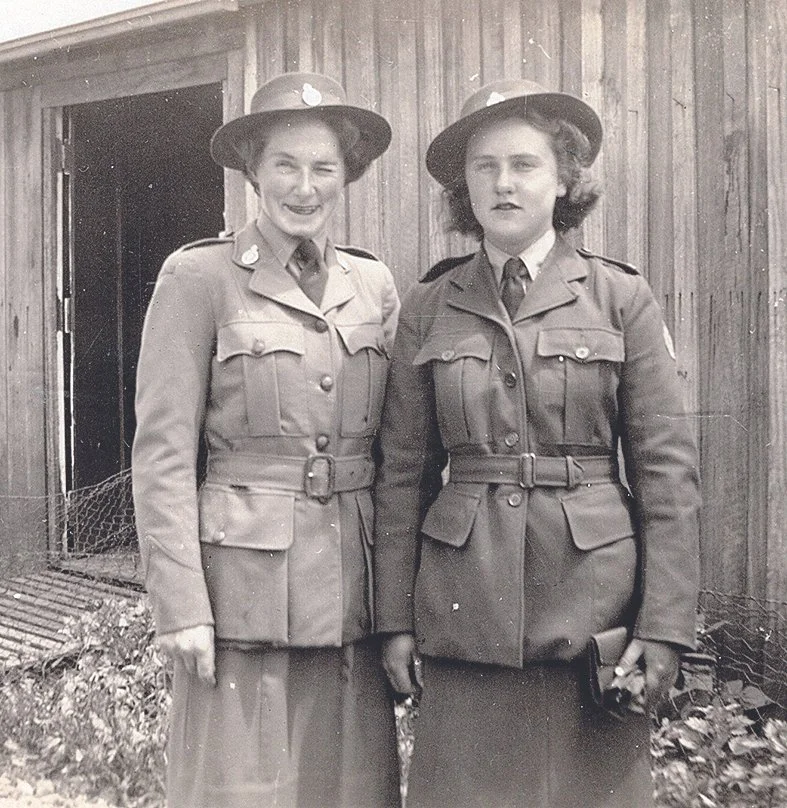
• Land Army Girls at Wonder Valley with Mr McLennan.
Each year on Anzac Day we gather to remember courage, sacrifice, and service. We remember the soldiers who landed at Gallipoli, those who fought on distant battlefields, and all who have served our country since.
The 2026 Anzac theme, “Women in the Services,” gives us a chance to recognise something that for too long sat quietly in the background — the steady, capable, and often unheralded contribution of women in uniform.
From the early days of the Australian Women’s Army Service, the Women’s Royal Australian Naval Service, and Women’s Auxiliary Air Force through to today’s fully integrated Australian Defence Force, women have served with skill, courage, and determination.
They drove trucks, maintained aircraft, worked signals, nursed the wounded, and increasingly took
on leadership and combat roles, all while challenging the expectations of their time.
Anzac Day in 2026 reminds us that service has never been defined by gender — only by commitment — and that the story of Australia’s defence is richer, stronger, and more complete because of the women who stepped forward and served.
These are a few local stories.
Land Army Girls in Scottsdale
The Australian Women’s Land Army began in 1942, when it became clear that with so many men at war, someone still had to keep the farms going. That “someone” was a group of determined young women who likely never imagined themselves on a farm or behind a plough. By 1944, 20 Land Army Girls made up the Scottsdale group — first billeted under the showground grandstand, then moved out to North Scottsdale’s Wonder Valley owned by the McLennans. Life or the conditions weren’t glamorous, but like many small country groups, they made up for it with grit, humour, and a willingness to just get on with it.
Their days were tough. They ploughed paddocks, drove temperamental tractors, worked livestock, and harvested whatever was needed—long hours, hard work, and only the occasional grumble about uniforms and those dreadful woollen undergarments. Getting around meant a bicycle if you were lucky, a horse if you weren’t. Yet somewhere in the mud and early starts, they built lifelong friendships, sharing plenty of laughter and a quiet pride in knowing their work mattered—not just locally, but to troops far from home who depended on that food.
We know a handful of their names—Phyllis Smart, Margaret Elliott, Ruby Anderson, twins Millie and Mavis Jacobs, Zoe and Nancy Hill, Nellie Lethborg, Hazel Cassidy and Billy Briggs—but many others have faded from record, if not from impact.
Phyllis Smart T127, Scottsdale, recalled being one of 14 girls employed on vegetable production at Scottsdale.,
“We live in the hostel, which before the war was the grandstand, on the showground. We now have hot water and showers. We have two dormitories, one with 14 and the other with six beds. You would smile at some of our ‘pin-ups’, but outstanding is Mr Churchill, of whom we girls are all proud.
“We have been busy thrashing beet seed and parsnips. Our faces get so black we are hardly recognisable, but we say, “The dirtier you are, the harder you’ve worked!”
“Although this job we are doing is not easy, we are proud to know we are helping our gallant brothers and sweethearts who are giving even life to defend us. We will never forget our motto; we will “stick to it” to the end.”
Zoe Adams T126, Scottsdale, recalled being one of the eight girls who work at Wonder Valley.
“ expect many other land girls have heard of it, and I can tell them it is “swell”. We have a large cook-house for meals, with a huge fireplace. There are four huts, nicely lined, each with cupboards, and favourite film stars hang over the beds. The flat of 100 acres grows cabbages, parsnips and carrots. We had weary days planting the cabbages and hoeing the root crops.
“We were all very proud of our vegetables that we had put in; then the flood came, and it was heartbreaking to see our work all washed away. Potatoes and carrots were flowing with the current everywhere.
“In all this disappointment and loss to our bosses, the McLennan brothers, they have been wonderfully good to us, so we have to help them and work hard for the hope of better success next year.
“Nell Hardstaff and I had quite an exciting Saturday morning’s work about three weeks ago, when we dug, topped, and bagged 19 bags of carrots, and at 11.40am we were able to help sew up the other bags. We prided ourselves that we had done a good job.
One Sunday afternoon we had to cut cabbages urgently for the factory, in the pouring rain and every now and then someone lost a gum boot. We managed to get our 100 bags. We ended by dancing the hokey-pokey in a pool of black water. It was all fun. For three days we had to cut cabbages with the water brimming our gum boots. There were a few who “went on”, but we always finished with jokes.
When the war ended in 1945, the Scottsdale unit quietly disbanded, their contribution largely unrecognised for decades. But their legacy was already written in the fields they worked. As they said themselves, they would “stick to it” to the end—and they did.
In a place like Scottsdale, their work wasn’t just helpful—it was essential.
Private Jan Warner, F25697
I was destined to go into the Army, as both my older brothers had already enlisted in the Army, the eldest a Vietnam Veteran. My cousin too served and is a Vietnam Veteran.
Growing up Anzac Days were very emotional for me, the march, uniforms and speeches. I was in the school choir and always sang at the service and when the Ode was said and the bugle sounded, I would always get emotional.
My grandfather and six great uncles all enlisted in WWII. They were the lucky ones, all survived, but they
never talked about their time or experiences.
My Army service started in 1973 aged 17, I just knew it was what I wanted to do. Though in 1976 I
became a mother and my service career ended. Pregnancy required me to leave the Army, although the
services were still part of my life through my husband who was still in the Army.
I was trained as a Technical Storeperson, and though I had both good and some bad experiences, I will be always proud the I served my nation. Now, my service is through the Scottsdale RSL Sub
Branch committee and I did a stint as President. This association has given me much pride and look forward to many more years.
“Lest We Forget”.
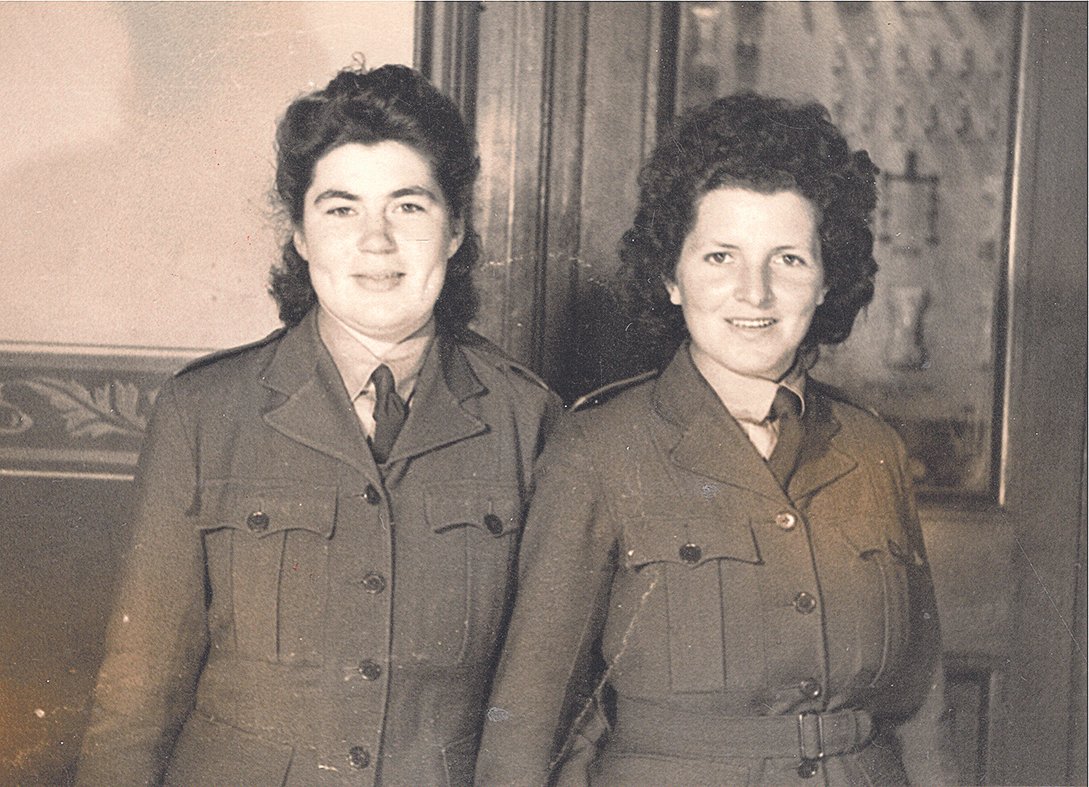
• Jan Warner (centre).
Colleen Brown
ANZAC Day for me is about remembering what service personnel sacrificed for us to have the Australia we have now; also, those who didn’t return home. I have been dedicated to the RSL for many decades and have served on the committee for around 10 years.
I wasn’t in the military, but my family tree is littered with those who did serve. Great uncle William John Hathaway went off to WWI, uncles Bernard Johnson and Henry Evans in WWII. In 1917 my grandmother received the telegram no mother should ever get: that uncle Henry was missing in action. He had been in Gallipoli, and it took many years to confirm his death in action.
Early in my life I met Private Graeme Weldon, a Vietnam veteran, and we had a wonderful life together although he had seen the horrors of war and bore the scars both mentally and physically.
He was on the front line with machine gun for much of the war but on the day his daughter was born they gave him a day off. His best mate took his place and was shot. He always said he was a cat with nine lives; he was right on another occasion he dodged that bullet and then later in his army career he trod on a mine, thankfully not detonating.
So why does Anzac Day mean so much to me? Well, it’s about honouring, to remember not only my family’s journey but all those that sacrificed their lives, and we wouldn’t be here today without them.
Now of course you see what’s happening yet again in the world with so much uncertainty and think what did we learn from our past?
• Colleen Brown.
Captain (AAC) Jennifer Reid,
OIC Scottsdale 603 Army Cadet Unit
My connection to the services began with my grandfather’s WWII legacy, leading me to join the 603 Army Cadet Unit in Scottsdale at age eleven. It was there, in the mid-90s, that I truly found my footing.
The unit instilled in me a foundation of confidence and resilience that shaped the professional woman I am today.
While my dream of joining the regular army was eventually cut short by a medical evaluation, that passion for service never wavered. I carried those values into my career as a nurse and my years as a volunteer ambulance officer and Red Cross member.
When a push to revive the 603 began in 2021, I stepped up as the Officer Commanding. Working alongside a cadet instructor and guided by Major Adams, I advanced to the rank of Captain.
Today, I thrive on the discipline and structure of the unit, but more importantly, the chance to mentor the next generation.
We balance traditional drills and community service with modern technology like drones, all while fostering the same spirit of mateship I found decades ago.
For me, Anzac Day remains a deeply personal time to honour the sacrifices of those who served.
Whether through the tri-service gatherings that bring all of Tasmania together or the daily growth I see in my cadets, I am proof that there are many ways to serve.
I always encourage young people to join; the lifelong skills and character you build here will set you up for whatever path you choose.
• Jennifer Reid.
Private Gayle Edson F363408
I wasn’t brought up in what you’d strictly call a military family, but both my father and grandfather served.
In 1975, I followed in their footsteps, joining the Citizen Military Forces (now the Army Reserve) before being posted to the Royal Army Corps of Transport.
I didn’t go to war, and even today I sometimes wonder whether I can truly call myself a veteran.
I served for six years. My first posting was to 3 Movement Control Unit in Melbourne, part of the Royal Australian Corps of Transport, before joining full-time in the Women’s Royal Australian Army Corps and being posted to Royal Australian Signals Corps as an Operator, Keyboard and Cipher, where I completed cipher training—including learning to use an enigma machine. It was quiet, precise, and important work.
I found real purpose in supporting those on the front line. While I wasn’t in combat, I was proud to play a role that helped others do that job. It gave me a strong sense of contributing to something bigger than myself.
I met my husband, Peter, while working at the Airman’s Club at Tottenham RAAF Base during my university days.
He had served in Vietnam, and after we married and had our first child, I chose to leave the Army to raise our family—a decision I’ve never regretted, though I sometimes wonder what a full career might have been.
Anzac Day became something we shared, and over time I came to understand just how important those traditions are. The Army gave me strength, confidence, discipline, and lifelong friendships.
This Anzac Day feels especially significant. Following the passing of Simon Hirst, I have stepped forward to MC the day.
It is particularly meaningful as we recognise women in the services, and I feel proud knowing our local commemorations in Pioneer, Scottsdale and Bridport are being led by women.
• Gayle Edson.
PO Steward Hayley Wiggins (Kettle) W142965
I joined the Navy in 1988, completing basic training at Cerberus before moving to steward training on the HMAS Jervis Bay.
I am immensely proud to have been part of the very first class of women to go to sea; before this, women simply weren’t deployed on ships. Because she was the only vessel equipped with the necessary amenities for women at the time.
My first deployment was a whirlwind—navigating the tip of Australia through Southeast Asia, then back around to WA. We even called into Brisbane for World Expo 88.
As a steward, my world was a flurry of cocktail parties and formal dinners, but the job soon shifted from hospitality to the front lines of peacekeeping.
During a period of unrest in Vanuatu, we were deployed on a Non-combatant Evacuation Operation (NEO) to retrieve Australian citizens. Because we couldn’t dock, we prepared for an “At-Sea Transfer” where evacuees would have to board via cargo nets.
Knowing we had many children to rescue, we spent our drills practising with medicine balls to mimic the weight and care required to move a child safely. In those days, everything was “hush-hush”— no social media, just French planes circling overhead to monitor our movements.
My career was full of these surreal experiences. I spent four years at HMAS Creswell, which was absolute paradise. With the white sand and blue water, I never felt homesick, especially since it seemed like every second person from Scottsdale came to visit!
Another highlight for so many different reasons was Rob Lowe the American actor, filmmaker sister had her wedding at HMAS Creswell. We organised the whole wedding from the service, drinks on the quarter deck, reception in the wardroom.
A great day AND got to keep a few mementos with his name on it. A career highlight when you are 18 years old teenage girl.
Homeschooling Captain Ramsay’s three children was another highlight of time at HMAS Creswell while the Captain and his wife were deployed in the UK for six months.
35 years later while working at Aqua Property in Scottsdale one of those children looked me up as he was visiting DSTO for his work and remembered I had told him about Scottsdale being the “potatoes capital” and the factory was beside the Army food plant. It was a lovely surprise and I couldn’t believe he remembered me.
The life of a steward was one of scale and service. On the HMAS Creswell, we would have 2,000 midshipmen at the base training.
We served breakfast, lunch, and dinner in two massive sittings of 1,000 people each. But my absolute highlight was working with Camp Quality. For two weeks every December, we hosted sick children for a fortnight of fun.
I was in charge of the five-year-old girls. It was heartbreaking but beautiful, and a side of the Defence Force the public rarely sees.
My service also led to a one-of-a-kind royal encounter. By then, I had married a Naval cook and we had two children. My husband, a Warrant Officer, was posted to Hobart when a “one-off” opportunity arose: the Royal Danish ship was docked, and I was asked to chauffeur three officers around Tasmania.
For one week, I drove them to Mount Field, Port Arthur, Coles Bay, and the Bay of Fires in a Navy-flagged car with an ironing board in the boot for their uniforms. It wasn’t until the third day that I realised the man in my front seat was Prince Frederik (years before he met Mary!). Not many people can say they’ve chauffeured a future King around the Tassie bush.
I joined the military with no family history of service and knowing nothing of that world.
Today, whether I’m thinking back on my service or heading into work at Woolworths, I carry the lessons of teamwork and structure with me.
My advice to anyone wanting to be part of a team is simple: it doesn’t matter if it’s a military uniform, a school uniform, or a work uniform—wear it with pride. A team is only as good as the individual who shows up and gives their best.
• Hayley Wiggins with her sister Mardi.